Skin Cancer Prevention

Skin Cancer Prevention

high five

prevention

Around 90% of all skin cancers are preventable. Learning about the risks associated with ultraviolet radiation (UVR) and how to prevent skin cancer by adopting simple sun safe strategies saves lives. Use the menu above to shortcut to content topics or simply scroll through our comprehensive guide.

skin cancer
the facts

SKIN CANCER STATISTICS ARE COMPELLING. RATES ARE RISING FASTER THAN ANY OTHER CANCER, YET THE DISEASE IS ALMOST ENTIRELY PREVENTABLE AND KNOWING HOW TO SPOT THE EARLY SIGNS AND SYMPTOMS, SAVES LIVES.EARLY DETECTION SAVES LIVES.

  • 1 in every 3 cancers diagnosed is skin cancer - it is the most common cancer in the UK and worldwide.
  • 1 in 4 males and 1 in 5 females will be diagnosed with non-melanoma skin cancer in the UK.
  • Over 210,000 cases of non-melanoma skin cancers are diagnosed annually in the UK with cases expected to reach 400,000 annually by 2025.
  • Over 16,000 cases of melanoma (the deadliest form of skin cancer) are diagnosed annually in the UK and the incidence in Britain has risen faster than any other common cancer.
  • 1 in 36 UK males and 1 in 47 UK females will be diagnosed with melanoma skin cancer in their lifetime and it is now one of the biggest killing cancers in young adults (aged 15-34).

AROUND 90% OF SKIN CANCERS ARE CAUSED BY DAMAGE FROM OVER-EXPOSURE TO ULTRAVIOLET RADIATION, MAKING THE DISEASE ALMOST ENTIRELY PREVENTABLE!

solar uv
the facts

SOLAR ULTRAVIOLET RADIATION (UVR) IS A KNOWN CARCINOGEN, IT CANNOT BE SEEN OR FELT AND IS NOT RELATED TO TEMPERATURE. IT CAN PASS THROUGH CLOUD, BOUNCE OFF REFLECTIVE SURFACES AND IS THE PRIMARY CAUSE OF SKIN CANCER.

Almost all skin cancers are caused by over-exposure to UVR. All skin types can be damaged by UVR. Damage is permanent, irreversible, increases with each exposure and can result in death.

The sun emits three types of UV rays - UVA, UVB and UVC. UVC rays are blocked by the ozone layer, whilst UVA and UVB both reach the earth’s surface and penetrate our skin.

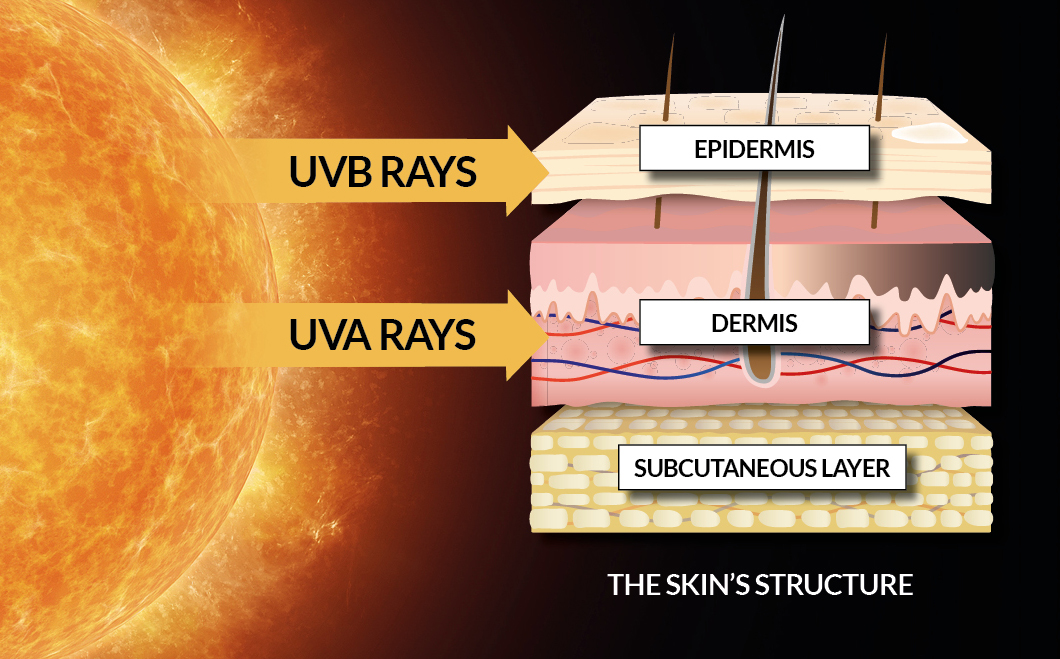
UVB rays reach the outer layer of the skin (the epidermis) – they are known as ‘burning rays’ and are the primary cause of sunburn and skin cancer.

UVA rays penetrate the middle layer of the skin, (the dermis) they also contribute to skin damage and skin cancer and are also responsible for around 80% of the visible signs of premature ageing.

UVA levels are consistent during daylight hours, maintaining almost the same level of strength throughout each day and throughout the year. UVA accounts for up to 95 per cent of the UV radiation that reaches the earth’s surface and it can penetrate (pass through) cloud cover and most glass and plastic. During our lifetime, we are therefore all exposed to high levels of UVA radiation.

Most of the sun’s UVB radiation is absorbed by the ozone layer in the earth’s atmosphere and levels vary throughout the day. UVB becomes stronger between 10 am and 4 pm, it intensifies during the summer months, the closer to the equator we are and whilst it can penetrate cloud cover, it cannot penetrate solid objects such as glass and plastic.

skin types
and uvr

IT IS A COMMON MISCONCEPTION THAT PEOPLE WITH DARKER SKIN TONES ARE IMMUNE TO SUN DAMAGE AND SKIN CANCER. ALL SKIN TYPES CAN BE DAMAGED BY UVR AND ALL SKIN TYPES CAN GET SKIN CANCER.

Although skin cancer is much more common in fairer skin types that tend to burn more easily, people of all colours, including those with dark brown and black skin, can get skin cancer. Even if you never sunburn, you can get skin cancer.

Darker skin types that tan easily and rarely or never burn have more melanin, a natural pigment that our skin produces when we are exposed to UV radiation and exists solely to protect our skin from harm.

However, even if we tan rather than burn, the simple fact that our skin changes colour is a sign of damage – it’s a warning sign that our body is working hard to defend itself from the harmful effects of the sun.

WHEN IT COMES TO SUN EXPOSURE, THE MESSAGE IS CLEAR - THERE IS NO SAFE WAY TO GET A TAN!

For further advice about your personal skin type and risk of skin cancer due to UV exposure, use the risk assessment tool within this app which will provide you with detailed advice based on specific criteria.

solar uvr
warning

BE WARNED THAT THE LEVEL OF SOLAR UV RADIATION THAT REACHES OUR SKIN AND EYES CAN INTENSIFY CONSIDERABLY WHEN IT REFLECTS OFF CERTAIN SURFACES IN OUR ENVIRONMENT.

UV radiation from the sun can reach us on the ground from three sources: Directly from the sun, scattered from the open sky and reflected from the environment around us. This means that you can still receive a substantial amount of UV exposure that can burn your skin and damage skin cells, even if you are shaded from direct sunlight.

UV reflections off snow can increase the intensity of UV reaching our skin and eyes by over 80%! You can burn your skin just as quickly on the ski slopes as you can on a Mediterranean beach! Take extra care if you enjoy winter sports to ensure your skin and eyes are protected.

Water, sand (particularly white sand) and light, smooth surfaces like those you would find round a swimming pool are also highly reflective. These surfaces can almost double the strength of UV reaching our skin and eyes. In addition, up to 50% of UVA and UVB passes through the upper 50cm of water. If you enjoy water sports, are swimming , sat on the beach or around the pool, be extra careful to take measures to protect your skin and eyes and be especially vigilant with children who are highly susceptible to sun damage.

solar uvr
and our eyes

OUR EYES ARE UP TO 10 TIMES MORE SENSITIVE TO UV DAMAGE THAN OUR SKIN. OVER-EXPOSURE TO UV LIGHT CAN DAMAGE OUR EYES AND IS THE LEADING CAUSE OF CATARACTS AND PHOTOKERATITIS.

Intense or cumulative UV exposure can affect our eyes in a number of ways:

  • THE CORNEA: The cornea (the clear outer layer at the front of the eye that helps your eye to focus light so you can see clearly) can get sun burnt! It causes a painful gritty feeling in the eye and blurred vision!
  • THE WHITES OF THE EYE: The whites of the eye can thicken and grow over the cornea, obscuring vision.
  • THE RETINA: The macula, part of the retina, can deteriorate and lead to blurred vision.
  • THE LENS: Over time, the lens behind the iris can develop cataracts that cloud vision.
  • THE IRIS: If you have light coloured eyes you may be more at risk of / sensitive to UV damage.
  • THE SKIN AROUND THE EYE: The delicate skin around the eye ages quicker and can develop skin cancer. The removal of skin cancer close to the eye can be tricky and cause disfigurement.

sun burn
the facts

SUNBURN, REDDENING, PEELING AND EVEN TANNING OF THE SKIN IS CLEAR INDICATION OF SUN DAMAGE. OVER-EXPOSURE TO UVA AND UVB CAUSES DNA CELL DAMAGE THAT CAN LEAD TO ALL TYPES OF SKIN CANCER.

Cumulative sun exposure is the main cause of non-melanoma skin cancers, while sunburn plays a clear role in the development of melanoma.

Sunburn, particularly in childhood or adolescence can significantly increase your risk of developing melanoma. Skin damage builds up over time starting with your very first sunburn and the more you burn, the greater your risk of developing melanoma.

Sunburn (reddening of the skin) is a reaction to over-exposure to UV radiation caused by the sun and/or sunbeds. Our skin turns red within 2-6 hours of being burnt and continues to develop for the next 24 to 72 hours. The superficial layers of the skin release chemicals that cause our blood vessels to expand and leak fluid causing swelling, pain and redness. Without sun protection, UV radiation penetrates deep into the layers of the skin causing cumulative and irreparable damage to the skin cells.

sunbeds
the facts

SUNBEDS ARE NOT A SAFE ALTERNATIVE TO SUN-BATHING. SUNBEDS EMIT THE SAME HARMFUL UV RAYS AS THE SUN, CAUSING DNA DAMAGE THAT INCREASES A PERSONS RISK OF DEVELOPING DIFFERENT KINDS OF SKIN CANCER, INCLUDING THE MOST SERIOUS FORM MELANOMA.

There is so much evidence to support this, that the International Agency for Research on Cancer (IARC) has classified sunbeds as a Group 1 carcinogen. This is its highest cancer risk category.

Sunbed use at any age significantly increases the risk of developing skin cancer including the most serious form melanoma. However, the risk is even greater when used at a younger age. A review by IARC found that first exposure to sunbeds before the age of 35 years increases the risk of melanoma by an alarming 75 per cent and if used before the age of 30 the risk is further increased.

Sunbeds use fluorescent bulbs that emit mostly UVA radiation, but at much greater intensities than natural sunlight to enable the skin to tan quickly. Whilst UVB emitted from sunbeds may approach levels similar to that of bright sunlight, it is the intensity of UVA radiation that penetrates deeper into the layers of the skin (the dermis) to also be aware of.

For many years scientists believed that UVB radiation was the most harmful due to the links between sunburn and melanoma. However, since the late 1980s we have known that UVA radiation also increases the risk of cell damage and skin cancer and by using a sunbed you are significantly increasing the amount of UVA your skin is exposed to, thereby significantly increasing your risk.

Damage from both UVA and UVB is cumulative - it increases with each and every use and it is irreparable. Once the tan fades, the damage remains and it can result in very serious consequences over time.

REMEMBER THAT IT IS ILLEGAL TO USE SUNBEDS
IN THE UK IF YOU ARE UNDER THE AGE OF 18.

who is
at risk

SKIN CANCER DOES NOT DISCRIMINATE WHEN IT COMES TO SKIN TYPE. ALL SKIN TYPES CAN DEVELOP SKIN CANCER. HOWEVER THOSE AT GREATER RISK TYPICALLY FALL INTO ONE OR MORE OF THE FOLLOWING CATEGORIES:

  • Those with fairer skin types that redden or burn more easily and/or freckle due to UV exposure.
  • Sunbed users and active tan seekers due to intermittent, intense and cumulative damage.
  • Anyone with a history of sunburn, particularly in childhood and/or adolescence.
  • Outdoor workers that spend regular, prolonged periods of time outdoors without adequate protection.
  • Sports enthusiasts who enjoy extended, regular time outdoors without adequate protection.
  • Mature skin which has accumulated UV damage over longer periods of time.
  • Those with 50 or more common moles, however, if you have atypical moles (moles that have irregular features) the risk is significantly higher.
  • A family history of skin cancer or melanoma.
  • Previous radiotherapy treatment for other conditions can sometimes cause skin cancer.
  • Lowered Immunity: People who take immunosuppressants.
  • Overexposure to certain chemicals in the workplace.
  • Rare genetic conditions such as Xeroderma pigmentosum or Gorlin syndrome.

For detailed advice in relation to your personal level of risk for the development of skin cancer, use the risk assessment tool within this app which will provide you with detailed advice based on specific criteria.

the vitamin
d debate

EXPOSURE TO UVB RADIATION IS THE MOST EFFICIENT WAY FOR OUR BODIES TO BOOST OUR VITAMIN D SUPPLY. WHILST SOME SUN IS DEFINITELY GOOD FOR US, OVER-EXPOSURE TO UV IS A SERIOUS HEALTH RISK, IT’S THEREFORE SO IT’S IMPORTANT TO STRIKE THE RIGHT BALANCE.

There are two forms of vitamin D – vitamin D2 and vitamin D3 and to remain in good health it is important to ensure our bodies receive adequate levels of both.

Vitamin D2 is ingested from a healthy balanced diet and can be derived from everyday foods such as: Egg yolks and fatty fish like; trout, mackerel, salmon or tuna, as well as cod liver oil, or fortified milk, juices and cereals.

Vitamin D3 however, is most efficiently produced when our skin is exposed to the sun’s UVB radiation. Although environmental and personal factors greatly affect vitamin D3 production in the skin (meaning there is no ‘one-size-fits-all’ level of exposure) for most, vitamin D3 can efficiently and sufficiently be produced in around 15-20 minutes a day - from doses of UV exposure, below those which cause reddening of the skin or sunburn.

Vitamin D deficiency and supplements.

Vitamin D deficiency is not uncommon and can affect all age groups, races and ethnic backgrounds. It’s also not possible to achieve sufficient levels of vitamin D through diet alone. The NHS therefore recommends that we should all (from pre-school aged children, to the elderly) consider taking Vitamin D daily supplements, to keep our bones and muscles healthy.

Taking vitamin D supplements is safe as long as you stick to the recommended dosage as too much Vitamin D can cause health problems. However, if you have any health conditions, take any other medication or have allergies, it’s important to take advice from your GP first.

the solar
uv index

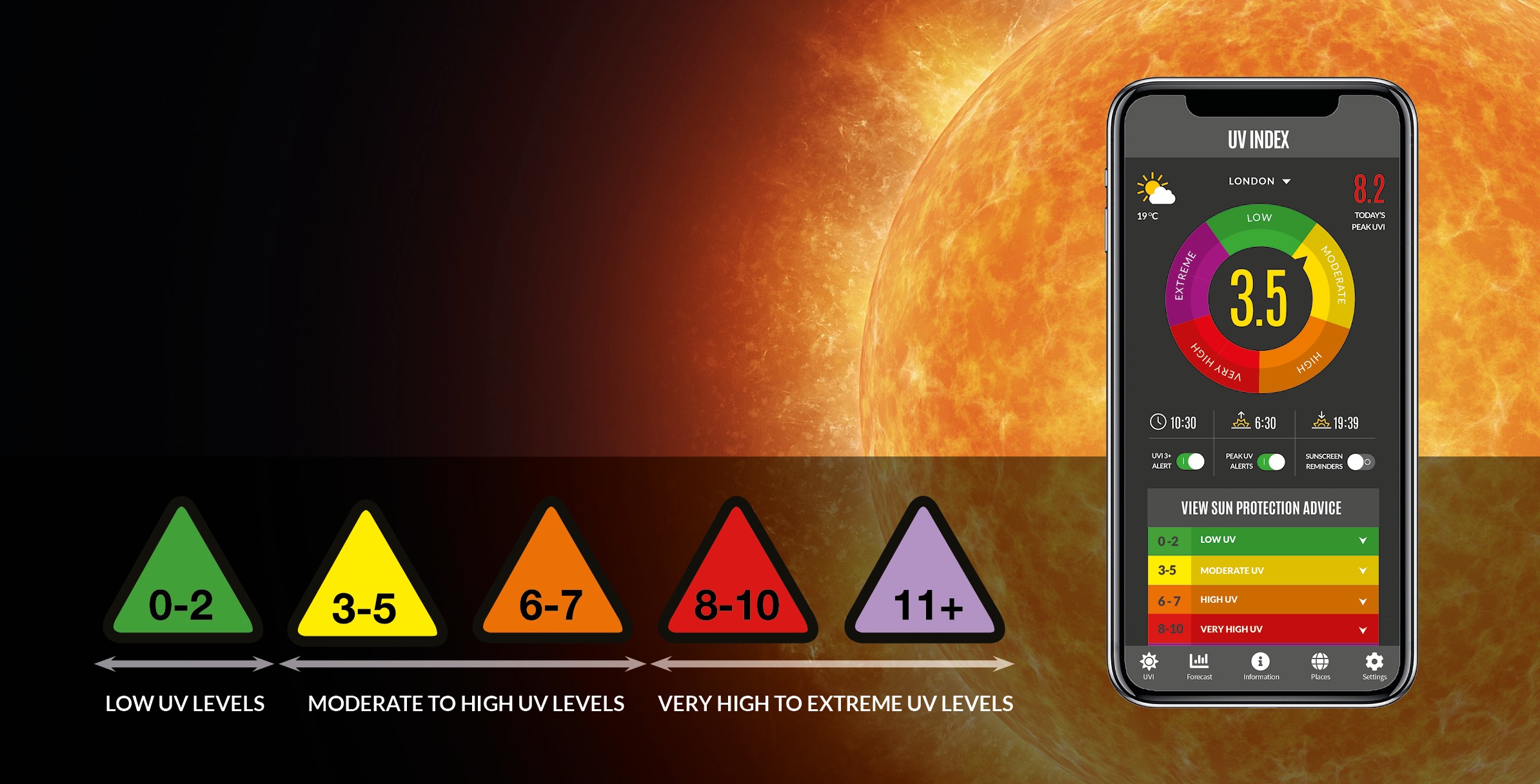
The ultraviolet index, or UV Index, is an international standard measurement of the strength of sunburn-producing ultraviolet (UV) radiation at a particular place and time.

The risk of harm from unprotected sun exposure is categorised by five numerical and colour coded values. The higher the number, the stronger the UVR and the less time it takes damage to occur. When the UV index reaches 3 or above, sun protection measures should be taken to protect our skin and eyes.

You can use this App to find out the UV Index and the 2 day UV forecast in your location, or for any location across the globe. You can also set alerts to let you know when the UV reaches 3 and when it reaches its daily peak in addition to advice on what sun protection measures are required. You can also set 2 hourly sunscreen reminders to help you take charge of your skin health.

five s’s of
sun safety

SKCIN RECOMMEND FIVE
SIMPLE STEPS TO SUN
SAFETY.

WHEN UV LEVELS REACH 3 OR ABOVE
SLIP, SLOP, SLAP, SLIDE, SHADE.

Remember it’s not just sunbathing that puts you at risk, but being in the sun without adequate protection. If you regularly take part in outdoor hobbies or sports, or work outdoors, you could be at greater risk. Make sure you use all five S’s of sun safety and remember the golden rule is to NEVER BURN!

  1. SLIP on clothing (your first line of defence)
  2. SLOP on SPF 30+ sunscreen to exposed skin
  3. SLAP on a wide brimmed hat
  4. SLIDE on quality sunglasses
  5. SHADE from the sun whenever possible

Read on for further detailed advice in relation to the Five S’s of Sun Safety and skin cancer prevention.


1) SLIP ON CLOTHING

  • Clothing can be one of the most effective barriers between our skin and the sun and should therefore be considered the first line of defence when it comes to protecting our skin from UV damage.
  • Clothing should always cover shoulders, but ideally as much skin as possible.
  • A closer weave fabric will provide better protection.
  • A high ultraviolet protection factor (UPF) rated fabric provides best protection.


2) SLOP ON SUNSCREEN

  • Always use a sunscreen with a Sun Protection Factor (SPF) 30 or above to ensure a high level of protection against UVB.
  • Make sure it’s broad-spectrum to provide protection against both UVA + UVB. Look out for a UVA symbol (ideally labelled 4 or 5 stars to ensure a superior level of protection against UVA).
  • Apply a generous amount, evenly to clean, dry, exposed skin 20 minutes before going outdoors and then reapply again once out - think of it like painting a wall - you always need at least two coats to ensure even and adequate coverage.
  • Regardless of the instructions all sunscreens should be re-applied at least every 2 hours (more often if perspiring and towelling) and always straight after swimming.
  • Protect your lips with an SPF 30+ lip balm.
  • Store your sunscreen a cool, dry and accessible place.Store sunscreen in a cool, dry accessible place.
  • Remember to check expiry dates as sunscreen becomes less effective over time. If an expiration date is not displayed, look for an open jar symbol which will have a number next to it (i.e. 9M or 12M) - that’s the number of months you can safely use the sunscreen after opening.


3) SLAP ON A HAT

  • Wear a hat to protect your scalp - a common place for skin cancer to develop as it is often left unprotected.
  • Always wear a hat with a wide brim to provide shade to the face, neck, ears and cheeks and eyes.
  • Be aware that baseball caps do not provide good protection as they do not shade the ears, neck or cheeks.
  • Legionnaire hats (a type of peaked cap with a distinctive extension on the back to protect the wearer’s neck against sunburn) is a popular alternative, particularly for children.
  • A close weave or a fabric with an Ultraviolet Protection Factor (UPF) will provide superior protection.


4) SLIDE ON SUNGLASSES

  • Our eyes are up to ten times more sensitive to UV damage than our skin, so it is important to wear quality sunglasses, not just when UV levels reach 3 or above, but on bright days, all-year-round.
  • The overall protection provided depends on the quality of the lens as well as the design.
  • Wear sunglasses that block 99 to 100 percent of both UVA and UVB rays, these should be marked with a rating CE UV400 or higher and will provide optimum protection.
  • Some sunglasses are labelled with an Eye Protection Factor (EPF) which ranges from 1-10. Those that carry an EPF of 9 or 10 provide excellent protection by blocking almost all UV radiation.
  • Polarised sunglasses reduce glare making it easier to see on particularly sunny days, however they do not increase the level of protection against UV radiation.
  • Ensure your sunglasses are close fitting, ideally with a wrap-around design to stop UVR entering the top and sides.
  • Remember price has no reflection on the quality of protection.


5) SHADE FROM THE SUN

  • Shade can provide a good barrier between our skin and the sun.
  • Seek shade whenever possible, particularly during peak UV hours (often between 11am and 3pm in the UK, or between 10am and 4pm in hotter climates).between 10am and 4pm abroad in a hotter climate).
  • Keep toddlers and babies in the shade at all times.
  • Never rely on shade alone, always combine with personal protection measures.

winter sun
protection

WHILST WE ASSOCIATE WINTER WITH LOW UV, THERE IS A STRONG CASE FOR ADOPTING ALL-YEAR-ROUND SUN PROTECTION AND WINTER SPORT ENTHUSIASTS SHOUD TAKE EXTRA CARE TO PREVENT UV DAMAGE.

We tend to associate winter with low UV levels and no requirement for sun protection. However, ask any dermatologist if they recommend daily use of sunscreen, all-year-round - and their answer will be yes!

Whilst UVB levels may be lower, the earth’s ozone layer (which acts as our sunshield), is at its thinnest during winter months. In addition, UVA rays remain consistent throughout each season and throughout each day. Therefore daily use of sunscreen will not only help protect your skin from the damaging effects of UV radiation, it will also help to prevent around 80% of the visible signs of premature ageing.

ENJOY WINTER SPORTS? BE WARNED!

Winter sports enthusiasts are at a particularly high risk of sun damage to both their skin and eyes. UV rays can be just as damaging on the ski slopes as they are on a hot, sunny beach! This is because UV radiation increases by approximately 10% with every 1,000m in altitude AND snow and ice significantly reflects UV, increasing the intensity penetrating our skin and eyes by over 80%!

If you enjoy winter sports make sure you pay special attention to protecting exposed skin with an SPF 30+ sunscreen, with 4 or 5 star UV protection and wear high quality eye protection that carries either an EPF (Eye Protection Factor) of 9 or 10, or is labelled CE UV400 or above.

key advice to
remember

IN ADDITION TO THE FIVE S’s
OF SUN SAFETY,
REMEMBER
THE FOLLOWING ADVICE:

  • When it comes to UV exposure, there’s no such thing as a ‘healthy glow’ or a ‘safe tan’, the simple fact our skin changes colour is a sign of damage.
  • Damage from UV radiation is cumulative and irreparable.
  • All skin types can be damaged by UV radiation.
  • You can still burn on overcast or cloudy days!
  • The intensity of UV radiation reaching our skin and eyes can increase considerably when it reflects off surfaces in our environment like, snow, sand, water.
  • When the UV Index reaches 3 or above take measures to protect your skin and eyes.
  • Always use the Five S’s of sun safety in combination and never rely on a single method alone.
  • Take extra care with children and babies - their delicate skin is highly susceptible to sun damage (see further information below).
  • NEVER allow your skin to burn!

children
and babies

ONE BLISTERING SUNBURN IN CHILDHOOD OR ADOLESCENCE MORE THAN DOUBLES A PERSON’S CHANCE OF DEVELOPING MELANOMA IN LATER LIFE. THE DAMAGE IS IRREPARABLE.

Sunburn in childhood is strongly linked to the development of melanoma in later life. A child’s delicate skin is highly susceptible to sun damage and can burn within minutes.

Extra care should be taken to safeguard children against UV exposure and by acting as responsible role models when it comes to sun protection will help to influence their behaviours, for a positive, sun safe, skin cancer free future.

  • Clothing should be considered the first line of defence against the sun’s harmful rays. Cover children and babies with as much clothing as possible. UPF 50+ UV clothing, sun suits, swim wear, sun hats and shade shelters are great solutions for protecting young skin.
  • Children should wear a wide brimmed hat to protect their scalp and provide adequate shade to the face, neck, ears, cheeks and eyes.
  • Use a minimum SPF 30 (ideally SPF 50) sunscreen, specifically formulated for children on all areas of skin exposed to the sun.
  • Ensure the sunscreen is broad-spectrum, to provide both UVA and UVB protection - ideally UVA rated 5 stars.
  • Apply liberally, ensuring good, even coverage.
  • Don’t forget shoulders, ears, nose, cheeks and feet.
  • Apply 20 minutes before children go outdoors and then reapply again once you are out to ensure adequate coverage with your first application.
  • No matter what the label says, reapply AT LEAST every 2 hours.
  • Reapply more often if perspiring and immediately after swimming / towelling.
  • Children should be kept in the shade as much as possible, particularly during peak UV hours and babies should be kept in the shade at all times.
  • Don’t forget to ensure children and babies are protected prior to going to school or nursery and have access to a sun hat and sunscreen for reapplication throughout the day during school / pre-school hours (see further advice below)
  • Children are less heat tolerant and are more likely to get dehydrated. Make sure they are kept hydrated with drinks, particularly water, available and encouraged regularly throughout the day, especially during warmer weather and physical activity.

sun safety
in schools

CHILDREN SPEND ALMOST HALF THEIR CHILDHOOD AT SCHOOL, WHERE THEY ARE OUTDOORS EVERY DAY, OFTEN DURING PEAK UV HOURS (11AM - 3PM) SO IT’S IMPERATIVE TO ENSURE THAT THEY ARE PROTECTED.

During school hours it is essential that children have access to a quality sunscreen and sun hat for use during break times, PE lessons and outdoor activities. Even if we apply sunscreen to our children prior to going to school, after 2 hours it will become ineffective, leaving them unprotected during peak UV hours when they are likely to spend longer periods of time outdoors.

Whilst parents should ensure children are equipped with appropriate sun protection items, schools have a duty of care to ensure children are safeguarded against the damaging effects of UV during school hours and implement a robust policy to reflect their commitment to both safeguarding and education.

Skcin operate a nationally accessible educational intervention programme that is free for all primary schools. The Sun Safe Schools programme provides primary schools with comprehensive resources and guidance to help them achieve an annual accreditation that outlines their commitment to:

PROTECTION: creating a robust policy and providing an environment that enables children and staff to stay safe in the sun. EDUCATION: teaching children about sun safety to increase knowledge and influence behaviour. COLLABORATION: working with parents, the management structure and the wider community to reinforce awareness about sun safety and skin cancer prevention.

Via the Sun Safe Schools national accreditation programme we are not only helping schools fulfil their obligations, but empowering children to recognise the importance of sun safety by learning to take charge of their own skin health - preventing skin cancer for our future generations and those to come.

For further information visit: sunsafeschools.co.uk

sun safety
in nurseries

A CHILD’S DELICATE SKIN CAN BURN WITHIN MINUTES AND CAUSE IRREPARABLE DAMAGE THAT INCREASES THEIR RISK OF DEVELOPING SKIN CANCER IN LATER LIFE.

When entrusting babies and toddlers to the care of a nursery or pre-school setting it is essential to ensure they have access to appropriate sun protection measures throughout the day to safeguard them against the damaging effects of UV.

Just like schools, these setting also have a duty of care to ensure a robust policy and sun safe environment is in place and that it is communicated effectively to parents so they can ensure they receive the required level of support.

Skcin operate a nationally accessible educational intervention programme that is free for all Nursery and pre-school settings. The Sun Safe Nurseries programme provides settings with comprehensive resources and guidance to help them achieve an annual accreditation that outlines their commitment to:

PROTECTION: creating a robust policy and providing an environment that enables children and staff to stay safe in the sun. EDUCATION: teaching early learners about sun safety to increase knowledge and influence behaviour. COLLABORATION: working with parents, the management structure and the wider community to reinforce awareness about sun safety and skin cancer prevention.

Skcin are successfully working with thousands of settings across the UK to help them fulfil their obligations and prevent skin cancer through education.

For further information visit: sunsafenurseries.co.uk

sun safety
in the workplace

UV RADIATION IS AN OCCUPATIONAL HAZARD FOR OUTDOOR WORKERS WHO ARE FREQUENTLY EXPOSED TO VARYING LEVELS OF UV FROM THE SUN AND ARE AT GREATER RISK OF DEVELOPING SKIN CANCER.

Frequent, prolonged periods of time spent outdoors without adequate protection makes outdoor workers twice as likely to contract skin cancer from exposure to the sun than indoor workers. Therefore outdoor workers should take care to protect their skin from the damaging effects of UV radiation.

The Health & Safety at Work Act states that every employer has a legal duty to safeguard, as far as is reasonably practical, the health of their employees - this includes exposure to UV radiation which is a known carcinogen to humans.

Employers therefore have a duty of care to educate their employees about the health implications the sun can have, the importance of appropriately protecting their skin and to ensure the provision of appropriate protection from the sun.

Skcin has developed and operate a national accreditation programme specifically designed for employers of outdoor workers to assist them in their duty of care to safeguard their outdoor workers and provide education to influence behaviours.

The Sun Safe Workplaces programme provides extensive resources to help employers assess the level of risk, implement a suitable sun protection policy and educate their workforce about the risks associated with UVR, the importance of personal sun protection measures and how to check their skin for the early signs of both melanoma and non-melanoma skin cancers.

For further information about the programme, please contact Skcin